

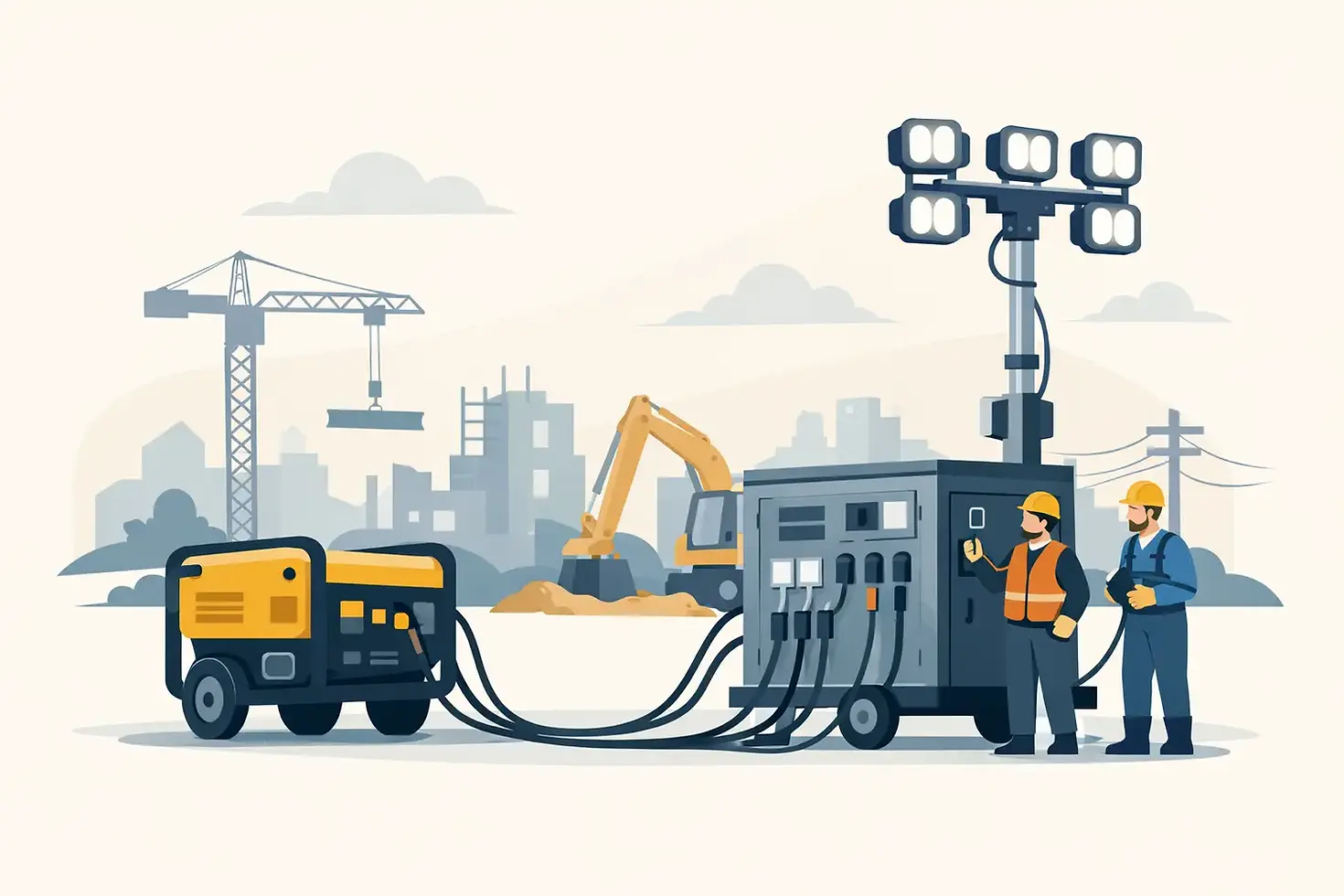
Temporary Power for Construction Site Jobs

If your build has crews ready, machinery booked and materials on site, but no safe power supply, the whole job slows down fast. Temporary power for construction site work is what keeps early-stage projects moving - from site sheds and tools to lighting, testing and critical services before the permanent supply is ready.
It sounds straightforward, but getting temporary site power wrong can create delays, safety issues and compliance problems that cost more than doing it properly in the first place. On active sites across the Coffs Coast and Mid North Coast, the best outcomes usually come from planning power early and treating it as part of the build sequence, not an afterthought.
What temporary power for construction site work actually covers
Temporary power is a safe, compliant electrical supply set up to support construction activities before the final electrical installation is complete. That can include temporary switchboards, leads, outlets, lighting, RCD protection, site sheds, amenities, pumps and equipment connection points.
The exact setup depends on the job. A small residential build might only need a temporary builder's supply and a few protected outlets. A commercial or light civil site may need a more considered arrangement, with multiple circuits, site lighting, amenities, underground service coordination and room for the power setup to change as the project progresses.
That is where site knowledge matters. Electrical work on its own is only part of the picture. Access, trenching, underground services, switchboard location, traffic movement and staging all affect how temporary power should be installed and protected.
Why temporary site power should be planned early
A common mistake is waiting until the site is almost ready for work before thinking about supply. By then, everyone is trying to work around each other, and small delays start stacking up.
If the temporary supply point is badly placed, you end up with leads running through work zones, repeated relocations or extra labour just to keep power available. If trenching and service runs have not been coordinated, the electrical scope can get held up by excavation, or the excavation team can be waiting on electrical marking and direction.
Early planning gives you better control over the practical questions. Where will site access be? Where should the temporary board go so it is usable but protected? Will it interfere with future works, slab prep or heavy vehicle movement? Is there a straightforward path for underground services? These are the decisions that save time later.
Safety and compliance are not optional
Construction sites are hard on electrical equipment. Dust, water, mud, vibration, vehicle traffic and general wear all increase risk. Temporary power systems need to be installed with those conditions in mind, not as if they were sitting in a clean, finished building.
That means proper protection, correct board setup, tested safety devices, suitable cable management and installation by a licensed electrician. It also means checking that the system suits the site rather than relying on a generic setup.
There is no single arrangement that fits every job. A domestic renovation with easy access is different from a new build on an uneven block, and both are different again from a civil site where excavation, machinery and underground works are happening at the same time. Good temporary power is not just about getting electricity on site. It is about making sure people can work safely around it every day.
Choosing the right setup for the site
The right temporary power arrangement depends on scale, duration and how the site will operate. For a short, contained project, a simple temporary supply may be enough. For larger jobs, flexibility becomes more important.
You may need a setup that can support several trades at once without constant overloading or workaround fixes. You may also need lighting for early starts, power to sheds or amenities, or a board position that can be maintained safely as excavation and structural work continue.
This is also where it pays to think beyond the electrical board itself. If underground power needs to be run, trenching should be planned properly. If machinery will be crossing the area, cable routes need protection. If the site level is changing, the original setup may not stay practical for long.
A contractor who understands both electrical and ground works can often solve these issues faster because the work is being considered as one site problem, not two separate scopes.
Temporary power and underground coordination
On many projects, the biggest headaches come from what is below ground. Temporary power for construction site work often needs trenching, service runs or a clear understanding of where existing services already sit.
Poor coordination here can lead to rework, delays and avoidable risk. If trenches are dug without the electrical layout being locked in, you may end up reopening ground or rerouting around work that has already been completed. If electrical planning happens without considering machine access or site levels, the installation may be technically correct but impractical on the ground.
This is one reason integrated delivery makes a real difference. When the same team can handle both electrical requirements and excavation planning, the site tends to move with less friction. There is less back-and-forth, fewer assumptions between trades and better control over timing.
For builders and project managers, that usually means fewer phone calls, fewer hold-ups and a cleaner path from temporary services through to the final install.
Common mistakes that cause delays
Most temporary power issues are not dramatic. They are the small planning misses that keep interrupting the job.
One is underestimating load requirements. If the setup is only just enough for the first stage, it may not cope once more trades arrive. Another is poor board placement, which can make daily access awkward or unsafe. In some cases, site power is installed without enough thought to weather exposure, traffic areas or future excavation.
There is also the problem of treating temporary power as separate from the rest of site preparation. In reality, it sits alongside trenching, access, site shed placement, drainage considerations and the sequence of early works. When those elements are coordinated, the job runs better. When they are not, temporary power becomes one more thing everyone is working around.
What builders and property owners should ask early
Before work starts, it helps to ask a few practical questions. How much power will the site actually need in the first stage and later stages? Where is the safest and most useful location for the temporary board? Will underground runs or excavation be required? How will the setup be protected from weather, damage and site traffic? And who is responsible for maintaining and adjusting it as the project changes?
These are not just technical questions. They affect cost, program and site efficiency. A cheap setup that needs repeated changes is rarely the cheaper option once downtime and rework are counted.
For homeowners or renovators, the key is simpler: make sure the supply is done legally, safely and with a clear plan. For builders and developers, the focus is usually on keeping the site moving without creating risk or adding unnecessary trade coordination.
Getting the handover from temporary to permanent right
Temporary power should support the build, not complicate the final connection. The changeover to permanent supply needs to be anticipated from the start so that the transition is efficient and compliant.
That includes thinking about final switchboard locations, permanent cable routes, underground pathways and any early works that could affect the finished installation. If temporary arrangements are installed with no regard for the end state, you can end up duplicating work or creating avoidable changes later.
This is where experience counts. A contractor who looks at the whole job can set up temporary supply in a way that supports what comes next, rather than just solving today’s problem.
Why the right contractor matters
Temporary site power is one of those jobs that looks simple until the site starts moving. Then every decision around placement, protection, access and underground coordination starts to matter.
For projects across residential, commercial and light civil work, it helps to work with a contractor who understands how electrical systems fit into real site conditions. That means licensed electrical work, yes, but also practical knowledge of trenching, machinery access, service routes and sequencing. That is the sort of work GROUND. is built for - power and precision from the ground up.
The real value is not just having power on site. It is having a setup that is safe, compliant and planned around how the job will actually run. Get that right early, and the rest of the project has a much better chance of staying on track.
If you are planning a build, think about temporary power before the first delay forces the issue. A well-set site is easier to work on, easier to manage and a lot less likely to bite you halfway through the job.


Comments