

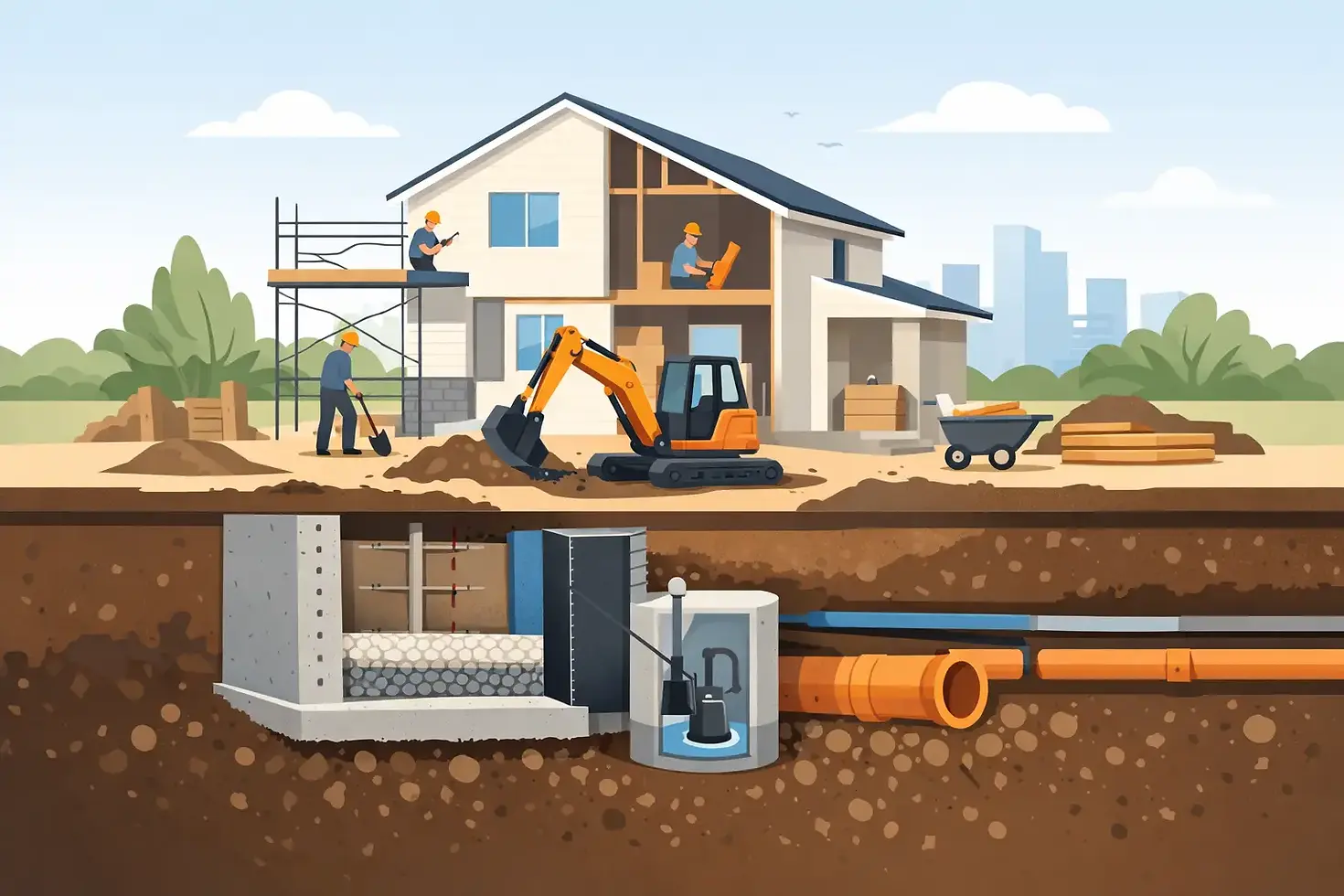
Renovation Done Right Starts Below Ground

A renovation can look straightforward on paper, right up until walls come off, trenches need digging, or the existing power setup turns out to be older and less compliant than expected. That is where jobs either stay on track or start costing more than they should. If you are updating a home, fitting out a shop, or reworking part of a site, the best results usually come from getting the hidden work sorted early, not treating it as an afterthought.
Too many projects focus on finishes first. Benchtops, paint colours, flooring and lighting styles get plenty of attention. Meanwhile, the work behind the walls and under the ground is what determines whether the job is safe, compliant, efficient and built to last. If that side of the project is poorly planned, everything else slows down.
Why renovation projects go off track
The biggest issues in a renovation are rarely the obvious ones. It is not usually the tile selection or the cabinetry lead time that causes the most disruption. More often, it is old wiring, undersized switchboards, poor access for underground services, drainage conflicts, or site conditions no one properly accounted for at the start.
In older properties, especially, what is already there may not suit what you want the space to do now. A kitchen renovation might need more circuits than the original setup can safely handle. A shed conversion may need underground power run to a new area. A commercial refit may expose a switchboard that is due for an upgrade before any new load can be added.
None of this is unusual. It just means the project needs practical planning and a contractor who understands how electrical and earthworks affect each other.
Renovation planning should start with services
Before you think about finishes, think about supply, access and load. Where is power coming from? Is the existing switchboard suitable? Do you need new conduits, trenching or service runs? Are there footings, slab edges, retaining walls or drainage lines that will affect installation?
This is where plenty of renovation budgets get caught. If one contractor handles the electrical and another handles excavation, the risk of delays goes up. One trade may be ready while the other is not. Trenches may be dug to suit one scope but not the other. Rework starts, and so do the extra costs.
When those scopes are coordinated from the start, the job is simpler. You get cleaner sequencing, fewer hold-ups and less back and forth on site. That matters whether you are renovating a bathroom at home or preparing a commercial tenancy for a new fit-out.
Electrical upgrades are often non-negotiable
A renovation is the right time to assess whether the electrical system still matches the property. Many do not. Homes that were fine twenty years ago were not designed for induction cooktops, air conditioning, home offices, EV chargers and modern appliance loads all running together.
The same applies to small businesses. A tenancy change or equipment upgrade can quickly push an older setup beyond what it should be doing.
Signs your renovation may need electrical work
If lights flicker, breakers trip, power points are in the wrong places, or the switchboard still reflects an older standard, there is a fair chance more than cosmetic work is needed. Renovation is also the best time to replace damaged cabling, improve lighting layout, add dedicated circuits and bring safety devices up to scratch.
Done properly, that work gives you more than compliance. It gives you a setup that actually supports the way the property is used now. That means fewer workarounds, less strain on the system and fewer headaches after handover.
The switchboard matters more than most people realise
A switchboard upgrade is not the glamorous part of a renovation, but it can be one of the most important. If you are adding load, changing layouts or modernising a property, the switchboard is often the control point that determines what is possible.
Leave it too late and the whole project can stall. Deal with it early and the rest of the electrical scope is far easier to manage.
Below-ground work can make or break the schedule
If your renovation includes an extension, detached structure, external lighting, drainage changes, site services or new supply runs, excavation is not just a side task. It is part of the core job.
Trenching needs to be accurate, safe and properly timed. Depths matter. Separation matters. Site conditions matter. It is not enough to simply dig a line and hope every service fits where it should.
That is especially true on sites with limited access, existing landscaping, tight setbacks or other buried infrastructure. A clean trenching plan reduces risk. It also helps avoid the all-too-common problem of one crew arriving to find the site is not ready for them.
One contractor for power and earthworks makes sense
On connected jobs, splitting responsibility can create friction. If underground conduits are not where they need to be, the electrician gets delayed. If the electrical layout changes after trenching, the excavation work may need to be redone. If neither trade owns the coordination, the client usually ends up carrying the cost.
That is why an integrated approach works. A contractor who can manage both the licensed electrical side and the excavation side understands how the job fits together in real terms. There is less guessing, fewer site clashes and better control over timing.
For property owners, that means clearer communication and less chance of being stuck between trades. For builders and project managers, it means one less interface to manage on site.
Renovation trade-offs are real
There is no point pretending every renovation has a perfect solution. Sometimes the most cost-effective option is not the neatest. Sometimes preserving parts of an existing installation saves money now but limits flexibility later. Sometimes the site itself dictates what is practical.
A good contractor will tell you that early. They will explain where the budget is best spent, what should be prioritised for safety and compliance, and what can be staged if needed. That matters more than getting a low number up front that grows once the job is underway.
If you are deciding where to invest, put the money into the parts of the renovation that are hardest to revisit later. Underground services, cabling, switchboard capacity and core site prep all sit high on that list. You can change a light fitting down the track. Re-digging a finished area is another story.
What homeowners and builders should ask early
The best renovation questions are practical. Is the current electrical system fit for the added load? Are there any access issues for machinery? Will trenching affect existing services, driveways or landscaping? Is there enough lead time to sequence excavation before installation? Are there compliance issues that could hold up the next stage?
Those questions are worth asking before demolition starts, not halfway through the project.
On regional and coastal jobs around places like Coffs Harbour, Bellingen and Urunga, local site knowledge can also make a difference. Ground conditions, access constraints and property layouts vary more than many clients expect. A contractor who has worked across the area will generally spot issues earlier and plan around them with less fuss.
A smart renovation is not just about how it looks
It is easy to judge a renovation by the finish. Clean lines, quality materials and good lighting all matter. But the jobs that hold up best over time are the ones where the unseen work was done properly. Safe power. Thoughtful layout. Accurate trenching. Solid site prep. Enough capacity for what comes next.
That is the difference between a renovation that simply looks new and one that performs properly for years.
GROUND. works on exactly that kind of scope - electrical and earthworks delivered together where the project needs both. It is a practical model because it reflects how real jobs run, not how they look in a quote folder.
If you are planning a renovation, start with the parts that carry the risk, not the parts that get posted online. Good work behind the walls and below the surface gives the rest of the project a fair chance to go right.


Comments