

Underground Power Installation Cost Explained
- GROUND.

- Jun 1
- 6 min read
If you're planning a new build, upgrading an old supply, or cleaning up overhead lines on your property, underground power installation cost is usually one of the first questions that comes up. Fair enough. It can be a smart long-term investment, but pricing varies a lot from site to site, and the biggest cost drivers are often underground where you can't see them.
That is exactly why rough online figures can be misleading. Two jobs with the same cable length can end up priced very differently if one block is flat and clear, while the other has rock, tree roots, existing services, poor access or extra compliance requirements. When the electrical work and the excavation are handled together, the scope is clearer and the pricing is usually more accurate from the start.
What affects underground power installation cost?
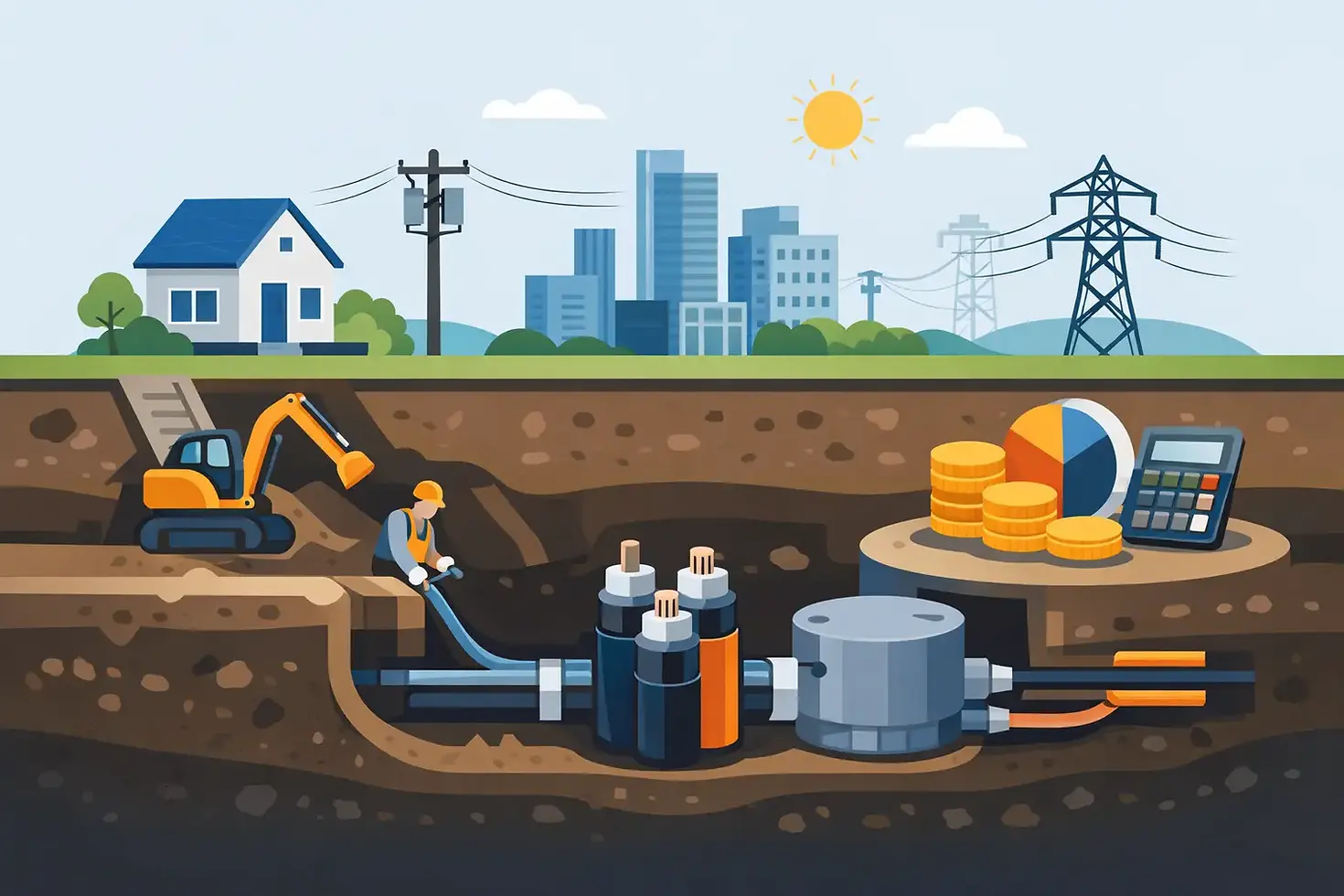
The biggest factor is usually the trench itself. On paper, underground power sounds straightforward - dig, lay conduit, install cable, backfill, test and connect. On site, every one of those steps can change depending on soil conditions, depth requirements, service separation, reinstatement needs and access for machinery.
Distance matters too. A short run from the street to a switchboard is one thing. A long service run across a rural block, commercial site or new subdivision lot is another. More distance means more trenching, more conduit, more cable, more labour and often more time coordinating with the network or other trades.
Site conditions can shift pricing quickly. Soft, clean ground is quicker to trench than compacted material, shale or areas full of buried obstructions. If machinery access is tight, some sections may need to be done by hand or with smaller plant, which increases labour. If the area has retaining walls, driveways, gardens, concrete or finished landscaping, making good afterwards also becomes part of the job.
Then there is compliance. Underground electrical work needs to be designed and installed to the right standards, with correct depth, protection, clearances and identification. If the supply authority has specific requirements for the service route, meter location or conduit type, that will affect the final price as well.
Typical underground power installation cost ranges
There is no single fixed price that applies to every job, but for residential work, many clients are dealing with costs anywhere from a few thousand dollars for a short, straightforward run through clean ground to significantly more for longer distances, difficult excavation or complex connection work.
A simple installation on an accessible residential site may sit at the lower end if the trench run is short, the ground is workable and there is minimal reinstatement. Once you add long distances, driveway crossings, rock excavation, trafficable areas, switchboard upgrades or authority coordination, costs rise fast.
Commercial and light civil jobs are usually priced on a more detailed scope. They often involve larger cables, stricter staging, heavier-duty protection, more complex trench layouts and tighter compliance requirements. In those cases, square metre rates or ballpark figures are less useful than a proper site assessment.
If someone gives you a price over the phone without asking about trench length, soil, access, supply details and reinstatement, treat it as a rough guess rather than a quote.
Why trenching and excavation make such a difference
A lot of people think of underground power as mainly an electrical job. It is, but the excavation side has a major impact on cost, timing and risk. In many cases, trenching is where the variables sit.
The depth and width of the trench depend on the installation type and the conditions on site. Before excavation starts, existing underground services need to be identified and the route needs to be planned properly. Hitting water, communications, sewer or petrol is not just expensive - it can shut a job down.
Excavation also affects the quality of the finished result. A trench cut too roughly, poor bedding, damaged conduit or rushed backfilling can create problems later. That is why it makes a difference when the contractor understands both the electrical requirements and the earthworks side. The job is not being handed back and forth between trades who each assume the other will sort out the details.
For clients, that usually means fewer delays, cleaner coordination and less chance of surprise variations halfway through the work.
Hidden costs that catch people out
Some of the most common budget blowouts are not hidden in the sense that they are unusual. They are just often missed early.
Driveway or path crossings are a good example. Trenching through open soil is one thing. Crossing under or through concrete, asphalt or paved areas is different. You may need saw cutting, boring, demolition, reinstatement or traffic-rated protection depending on the location.
Switchboard work can also add to the total. If the existing board is outdated, undersized or non-compliant, the underground supply job may need to be paired with an upgrade. That is often the right move, but it does change the project cost.
Authority requirements are another one. Network approvals, inspections, disconnections, reconnections and metering changes can all affect timeline and budget. These are not extras for the sake of it. They are part of doing the work safely and legally.
And then there is reinstatement. If the trench passes through lawns, landscaped areas, compacted drive surfaces or finished site works, putting everything back properly takes time and materials. A cheap quote that leaves reinstatement vague can end up costing more later.
Underground vs overhead power - is it worth it?
From a straight install-cost point of view, underground power is usually more expensive than overhead. There is more labour in the ground works, more site-specific risk and often more materials involved.
But cost is only part of the decision. Underground power can improve the look of a property, reduce exposure to storm damage, remove clearance issues and make future site planning easier. On some projects, especially new builds or major upgrades, it is also the more practical option.
That said, it is not always the best answer. If the site is difficult to excavate or the run is unusually long, overhead may still be the more economical choice. This is one of those cases where the right solution depends on the site, the intended use and the long-term plan for the property.
How to get an accurate price
The best way to understand underground power installation cost is to have the site looked at properly. A decent quote should consider the cable route, trench length, depth requirements, site access, switchboard position, connection method, ground conditions and reinstatement.
It should also be clear about what is included. Does the price cover trenching and spoil removal? Conduit and cable? Bedding and marker tape? Testing, compliance and connection? Restoration of the surface? If those items are not spelled out, comparisons between quotes get messy fast.
This is where using one contractor for both electrical and excavation work can save time and frustration. There is less room for scope gaps, fewer handover issues and a better chance that the quote reflects what the site actually needs. For property owners and project managers alike, that matters.
On the Coffs Coast and Mid North Coast, where sites range from tight residential blocks to sloping rural land and commercial premises with mixed access, local site knowledge also counts. Ground conditions and practical access are not side issues. They are often what determine whether a job stays on budget.
When the lowest quote is not the cheapest outcome
A low number can look good at the start, especially if you're juggling other building costs. But underground electrical work is not the place to buy on price alone. If the trench is under-specced, the conduit protection is wrong, the route is poorly planned or the reinstatement is left half-done, the cheaper option can become the expensive one.
Good contractors price for the work that actually needs to happen. That includes safe excavation, compliant installation, proper testing and a finish that holds up. It may not be the lowest figure on paper, but it is usually the more reliable path.
If you are comparing quotes, look for detail, not just totals. Clear scope, realistic allowances and practical site understanding are worth more than a vague promise to do it cheaper.
A well-planned underground power job should leave you with a safe, compliant supply and no headaches buried beneath the surface. If you want a useful price, start with a contractor who understands both the cable and the ground it is going into.


Comments