

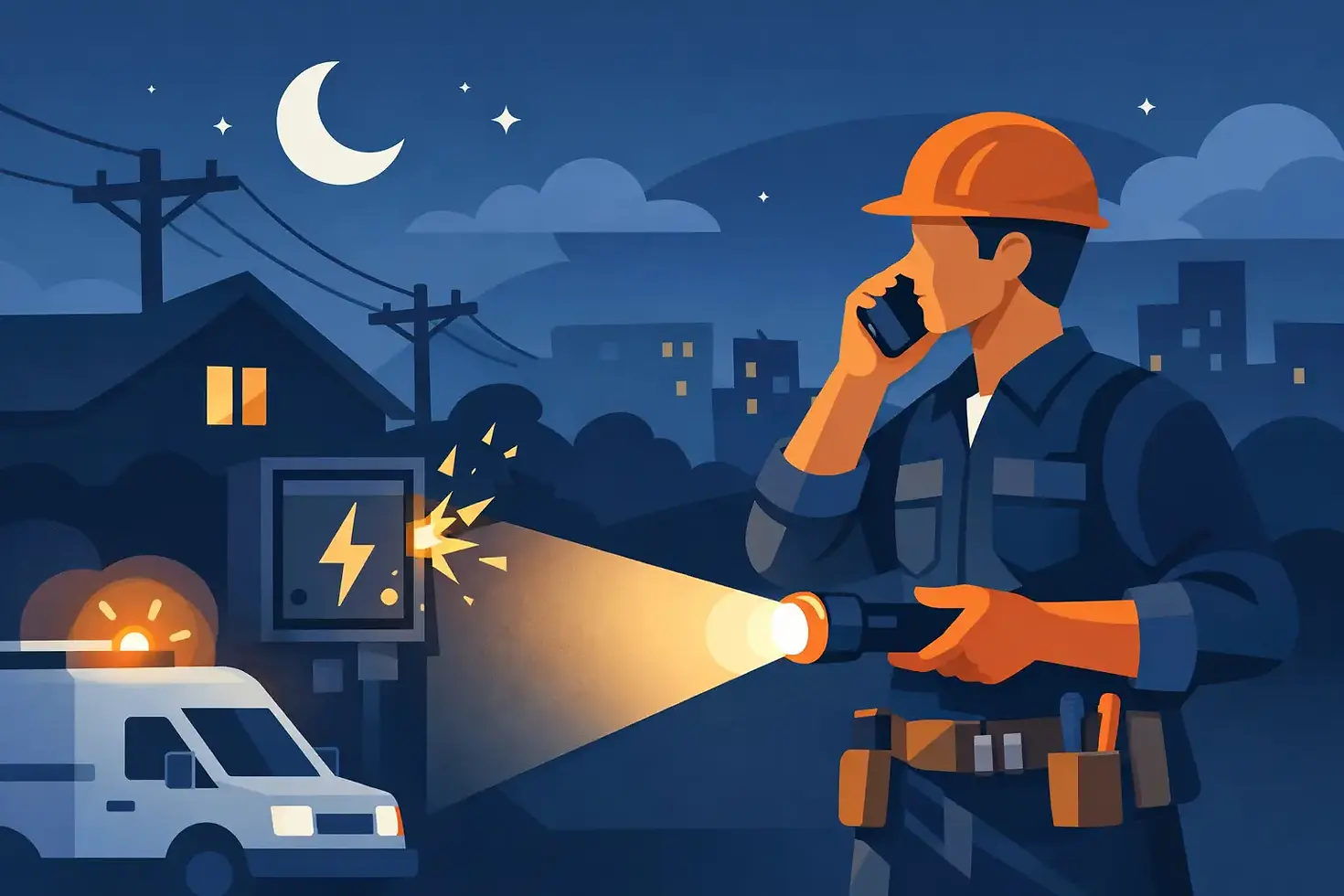
Emergency Electrician After Hours Guide

The lights don’t usually fail at 11.30 on a quiet weeknight for no reason. If your switchboard is tripping repeatedly, you can smell burning near a power point, or half the property has gone dead after rain, waiting until morning can turn a manageable fault into a safety issue. That’s when an emergency electrician after hours is not a convenience - it’s the right call.
For homeowners, business operators, builders and site managers, the real question is not just who can answer the phone late. It’s who can show up, isolate the risk, diagnose the fault properly and carry out work that is safe, compliant and built to last. After-hours electrical work needs calm judgement, solid fault-finding and clear communication, especially when people are stressed and the problem is affecting safety, security or operations.
When an emergency electrician after hours is worth calling
Not every electrical issue is an emergency, but plenty are. If there is any sign of burning, sparking, smoke, water getting into electrical components, exposed live parts, or a complete loss of essential power, it should be treated seriously. The same applies if safety switches will not reset, circuits are tripping without a clear reason, or equipment critical to your home or business has failed.
For a household, that might mean a damaged switchboard, no power to refrigeration, or a fault affecting medical equipment, pumps or hot water systems. For a business, it could be lighting failure, a board fault, loss of power to tills or cool rooms, or a dangerous issue that stops staff from working safely. On active sites, a damaged underground service, failed temporary power, or faults affecting tools and plant can hold up the whole job.
The trade-off is simple. If the issue is isolated to something minor, like a single faulty fitting that can be switched off safely, it may be reasonable to book standard service hours. But if there is heat, smell, moisture, repeated tripping or uncertainty around what is live and what is not, after-hours attendance makes sense.
What to do before the electrician arrives
The first step is to keep people safe. If there is smoke, fire, or immediate danger, call emergency services first. If it is safe to do so, turn off the affected circuit or the main switch. Don’t touch damaged wiring, wet outlets or any metal surface that may be energised.
A few quick observations can help speed up the job. Note which circuits have failed, whether the problem started after rain, whether any appliances were plugged in at the time, and whether you heard a bang or noticed a smell. If only one part of the property is affected, that matters. If the entire switchboard is involved, that matters too.
What you should not do is start pulling covers off, replacing fuses yourself, or trying internet fixes in the dark. Temporary DIY repairs often make fault-finding harder and can create a bigger hazard than the original problem.
Why after-hours faults need proper fault-finding
Late-night call-outs are rarely about routine electrical work. Most after-hours problems come with pressure, limited visibility and a real chance of hidden damage. That is why fault-finding matters more than guesswork.
A tripping safety switch might be doing its job because an appliance has failed. Or it might be pointing to moisture in an outdoor circuit, cable damage underground, water ingress in a junction box, or deterioration in older wiring. Resetting it without finding the cause can give you temporary power, but it does not remove the risk.
The same goes for burning smells and hot switchboard components. Sometimes the issue is a loose connection. Sometimes it is overload, aged gear or a more serious board problem. The solution depends on what the testing shows. A licensed electrician will work through isolation, testing and staged restoration so power can be returned safely where possible, without energising a dangerous fault.
Common after-hours electrical emergencies
Some faults come up again and again across homes, commercial properties and work sites on the Coffs Coast and Mid North Coast. Storm activity can expose weaknesses fast. Water ingress, damaged consumer mains, failed breakers, overloaded circuits and deteriorated switchboards are all common culprits.
Outdoor lighting and power circuits are another regular issue, especially where fittings, conduit or cable joints have been exposed to weather for years. In renovation settings, faults can also appear after changes to existing wiring, new appliance loads or accidental cable damage. On sites and rural or semi-rural properties, underground service strikes and damaged supply runs can quickly become urgent.
This is where practical site knowledge makes a difference. Electrical faults do not always sit neatly inside a wall cavity or switchboard. Sometimes the issue is tied to trenching, damaged underground cable, poor service routing or site conditions that need both electrical and excavation awareness to sort out efficiently.
What a good emergency response actually looks like
A proper after-hours response starts with listening. The electrician should ask the right questions, get a clear picture of the risk and give you realistic expectations about attendance, safety and likely next steps. Once on site, the priority is to make the area safe, identify the source of the fault and restore essential power where it can be done safely.
Sometimes the permanent repair can be completed on the spot. Sometimes the immediate job is isolation, temporary make-safe work and partial restoration, with full rectification booked once materials or daylight access are available. That is not cutting corners - that is good judgement.
What matters is honesty about the condition of the installation and what can be repaired safely at that hour. A no-nonsense contractor will tell you whether the fault can be fixed immediately, whether part of the property needs to stay isolated, and what the next step looks like. That level of clarity matters just as much as the repair itself.
Choosing the right emergency electrician after hours
When you are calling after dark, speed matters, but qualifications matter more. You want a licensed and insured electrician who handles fault-finding regularly, understands compliance requirements and can work cleanly under pressure. If the property includes site works, underground services or access issues, broader capability is a real advantage.
That is particularly true for builders, developers and property owners managing more complex jobs. A contractor who understands switchboards, service runs, trenching and reinstatement can remove a lot of friction when the problem is not just inside the building. It saves time, avoids finger-pointing between trades and gets the job moving again.
For local clients across the Coffs Coast and Mid North Coast, that practical mix is part of what makes GROUND. a useful call when the problem is urgent. The work is approached the same way every time - assess the risk, isolate the issue, fix what can be fixed properly and communicate clearly about the rest.
Cost, urgency and the reality of after-hours work
After-hours call-outs cost more than standard daytime bookings. That is normal, and it reflects availability, urgency and the type of fault involved. The cheapest response is not always the best value if it results in a temporary patch, missed defect or repeat call-out.
A fair after-hours service should still be transparent. You should know there is a call-out component, understand that fault-finding takes time, and be told if parts or additional works are likely to be needed. Straight answers matter, especially when you are making decisions under pressure.
It also helps to separate inconvenience from genuine urgency. No power to one non-essential circuit may wait until morning. Burning insulation, a dead switchboard, water in live equipment or a failed supply to a business usually should not. The right contractor will not try to oversell that difference. They will call it as it is.
After the immediate repair
Once the fault is stabilised, it is worth looking at why it happened. Emergency jobs often expose older switchboards, poor previous work, overloaded circuits or outdoor infrastructure that has reached the end of its life. Fixing the immediate issue is one part of the job. Preventing the next one is the smarter investment.
That might mean a switchboard upgrade, replacing damaged cable, improving circuit separation, repairing underground runs or updating weather-exposed fittings. For businesses and property managers, it can also mean planning maintenance around known weak points rather than waiting for another disruption.
Electrical emergencies have a habit of showing up at the worst possible time. A good after-hours electrician does more than get the power back on. They make the site safe, give you a clear read on the problem and leave you knowing what needs to happen next - which is exactly what you need when the job cannot wait until morning.


Comments